The Trip That Should Have Been Simple
When five of us planned a short visit to Delhi, our parents hesitated. We had promised to go only during the day, to stay together, to keep our phones on. None of it really helped. The unease was still there, quiet but unmistakable.
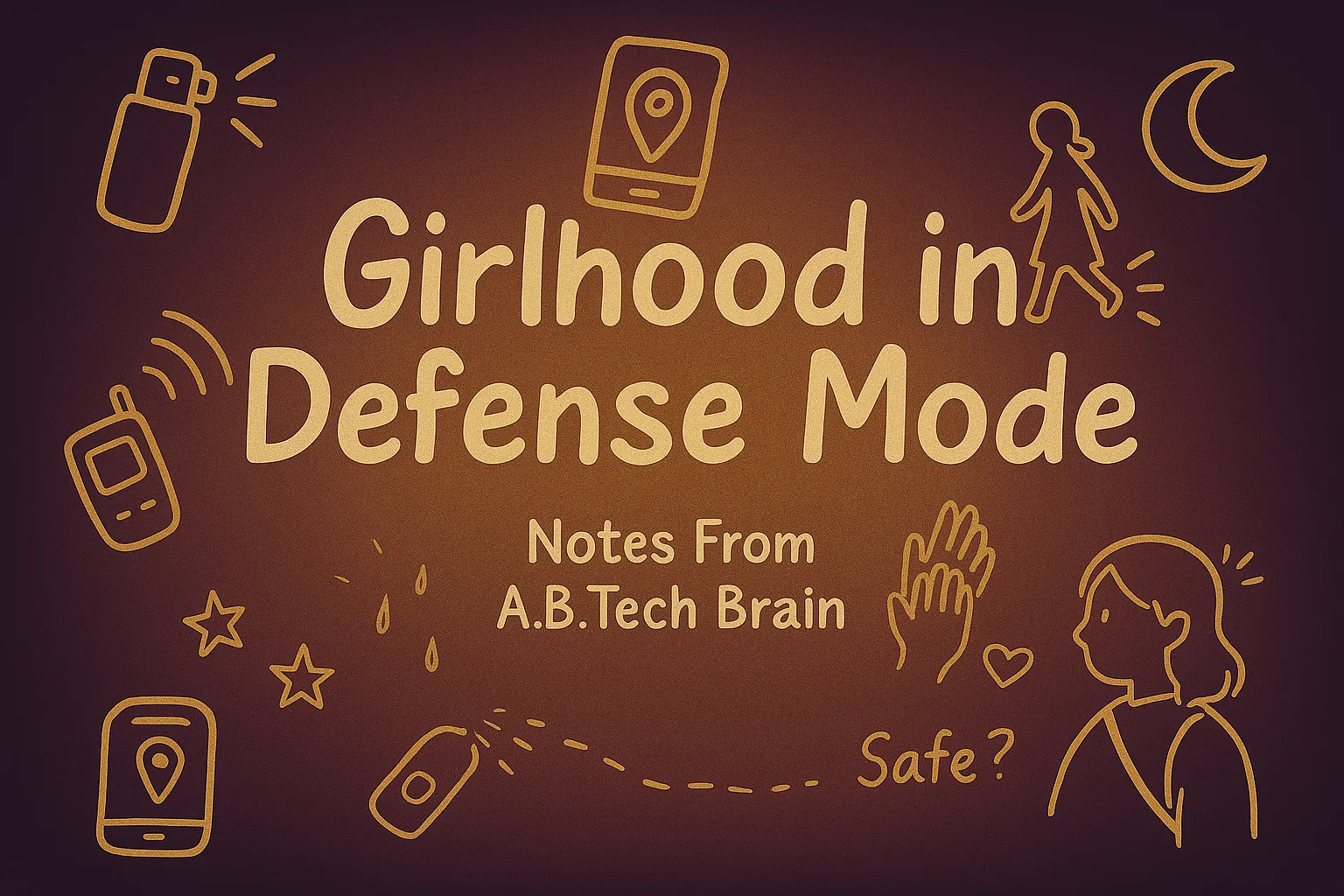
I carried a pepper spray in my bag without even thinking about it. It wasn’t dramatic. Just what you do. We shared our locations, kept answering calls, and texted every time we reached somewhere. Our parents finally relaxed only when we were all back home that evening.
At the time, it felt like overprotection. Now it feels like context. The older we get, the more their worry starts to make sense. We begin to see the world through that same cautious lens, and suddenly, all those rules that once felt restrictive start to look like survival instincts.
The Lessons That Arrive Quietly
It starts around adolescence. No one announces it, but the air changes. Family gatherings get smaller for you. You’re told not to wander, to stay near your mother, to avoid certain people without asking too many questions.
And even when nothing is said, you notice it in your mother’s eyes. The way her hand rests on your arm when you walk through a crowded room. The way she glances at certain uncles. It’s not paranoia. It’s memory. It’s an experience that’s been passed down because it had to be.
At 13, it felt unfair. Now I know it was her way of saying something she couldn’t say out loud: danger doesn’t always come from outside. Sometimes it sits right next to you, smiling politely.
The Math of Being Careful
That same carefulness follows us everywhere. Every outing, every ride, every walk comes with its own mental checklist.
In a shared auto, someone’s arm brushes against mine, and I freeze. I don’t know what to do. I can’t shout. I can’t take out pepper spray. It might have been an accident. It might not have. So I just sit there, trying to breathe normally while my mind keeps replaying what just happened.
Someone might say, “Why didn’t you say anything?” as if it’s that simple. But in the moment, it isn’t. The body reacts before logic does. It locks up. It freezes. And behind that silence is another quick thought that men rarely understand: what if he gets angry, what if it turns into a scene, what if I get blamed for overreacting.
So I do nothing. And then I hate myself for doing nothing. And that memory sticks, like a warning label I didn’t ask for but can’t peel off.
The Weight That Doesn’t Show
After a while, the alertness becomes automatic. I walk faster without realising it. I keep one earphone out in cabs. I check the mirrors. I send my location even when no one asks for it.
It stops feeling like fear and starts feeling like a habit. Like growing up means learning how to stay alert, not how to feel safe.
But it’s heavy work. Being careful all the time changes the way you experience everything. Even joy feels rationed. We start to measure freedom by the amount of risk it entails.
At this point, I don’t think I know a single girl who hasn’t lived some version of this—some moment of freezing, shrinking, pretending, calculating. It’s not rare. It’s routine. And that might be the most exhausting part.
Somewhere along the line, I stopped asking why my parents worry so much. I just started worrying, too.
What We Carry, and What We Deserve
This isn’t about weakness. It’s about the way girlhood quietly becomes self-defense. It’s about how fear and love get tangled together inside our parents, and how we inherit both.
It’s about how unfair it is that a simple trip, a ride home, or a day out needs this much planning. We have to think five steps ahead just to exist safely.
We’re not asking to be admired for being cautious. We’re just asking for a world where our mothers could finally breathe easy when we step outside. A world where careful can one day be replaced with carefree. Where coming home safe isn’t a small victory, but just the way the day ends.