The Offer Letter Euphoria
In college, “I got an internship!” is our version of fireworks. The group chat lights up with heart emojis, screenshots of offer letters, and the usual flood of “bro proud of you” messages. It feels like we’ve all just collectively made it.
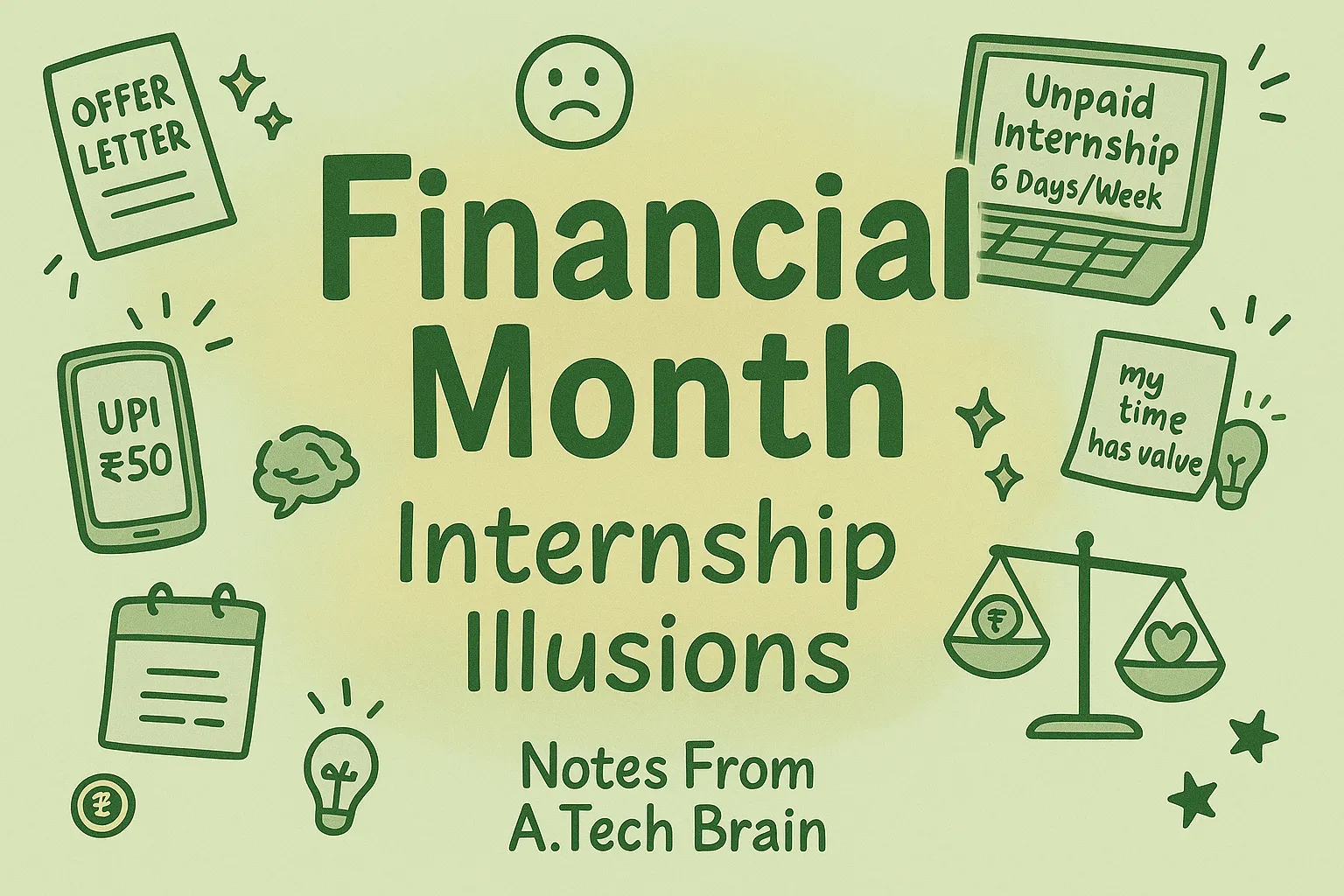
The illusion starts right there — that rush of validation, the feeling that you’ve stepped into adulthood. Until you check the details: no stipend, six-day work week, vague title like Campus Associate Intern (Marketing and Research and Stuff).
Suddenly, adulthood feels suspiciously similar to unpaid labour.
The Unpaid Exposure Economy
Every friend group has one person doing three internships at once, one ghosting their entire life, and one pretending to be “so busy” while secretly watching How I Met Your Mother reruns.
Some of us joined for the brand name, some for the LinkedIn update, some for the certificate we’ll never print. What no one said out loud — at least not at first — was how exhausting it feels to keep showing up for “experience” that doesn’t pay rent, snacks, or even emotional validation.
It’s funny until it’s not. You start to realise the cost of working for free — not just in money, but in time, energy, and self-worth. There’s something heavy about typing out perfect emails while secretly wondering if your time means less because you’re nineteen.
The Reality Behind “Experience”
The logic is simple: if you’re passionate enough, you’ll do it for free. But passion doesn’t pay for cab rides or coffee refills.
And that’s the quiet heartbreak of student life... we’re told to collect experiences like trophies, but nobody tells us that experience sometimes comes with burnout, late-night assignments, and the constant feeling of being replaceable.
Still, we do it. We show up. We learn. We adjust. We find joy in the small things — like getting a shoutout in a meeting, or figuring out how to write a professional email without sounding like ChatGPT.
When Money and Meaning Collide
Somewhere between unpaid internships and pocket-money math, I started building a small habit: tracking how much time I give away. Not just for work, for everything. For people, projects, classes.
That’s how I realised financial literacy isn’t only about knowing how to save; it’s about knowing when you’re giving too much of yourself for too little in return.
It’s not cynicism, it’s awareness. It’s learning that your time has value, even when the world hasn’t learned to price it yet.
A Quiet Lesson
Maybe that’s what this phase is supposed to teach us. Not how to master Excel or Google Sheets, but how to measure worth in more than certificates.
Because yes, internships are illusions sometimes. But inside that illusion, you still pick up things that stick — resilience, boundaries, a sharper sense of when to say “no.”
And maybe that’s the real experience.