The strange way years started slipping past
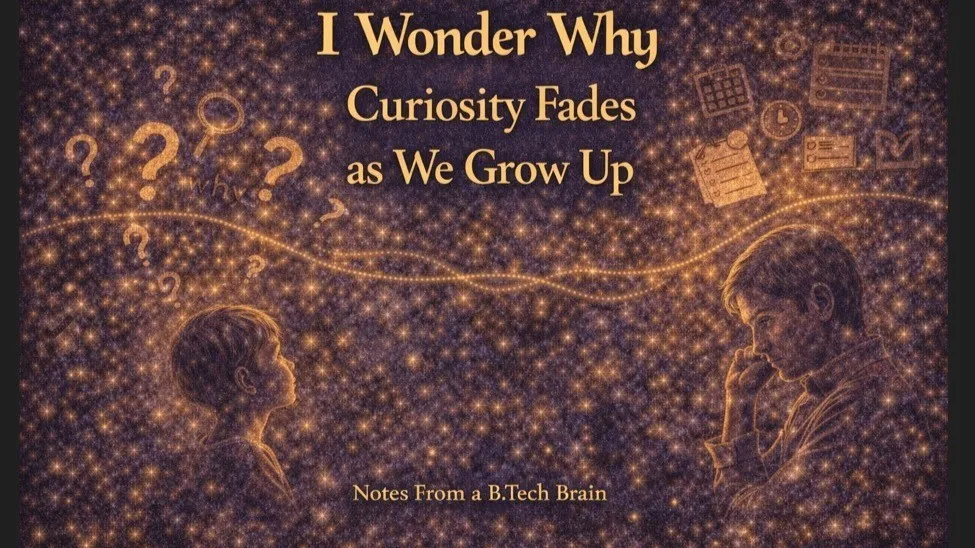
When I was a kid, time felt vast.
Summers stretched endlessly. Waiting for birthdays felt unbearable. A single school year felt like a lifetime. I remember days feeling long enough to hold multiple emotions without rushing any of them.
Now, months disappear without warning.
Someone mentions an event from “earlier this year” and I have to pause and ask myself which year they even mean. Weeks blur. Entire phases of life collapse into vague memory blocks.
Time itself has not changed. But the way it feels absolutely has.
So the question is not what happened to time. It is what happened to us.
Newness makes time feel bigger than it is
One explanation starts with novelty.
As a child, almost everything is new. First friendships. First fears. First rules. First real disappointments. The brain is constantly encountering situations it has never processed before.
New experiences demand attention. They get recorded in detail. They take up mental space.
When memory is dense, time feels full. When you look back, it feels long. Even in the moment, it feels slow because you are actively noticing everything.
Childhood does not feel expansive because time moved slowly. It feels expansive because life was packed with firsts.
Familiarity quietly flattens experience
Adulthood brings repetition.
You wake up, go to class or work, eat similar meals, take similar routes, solve similar problems. Even big events start following familiar patterns.
The brain is efficient. When it recognises routine, it stops recording details. It compresses experiences. Days become templates instead of stories.
That compression is what makes time feel like it is speeding up.
Nothing dramatic happened. The brain just decided most of it did not need to be saved in high resolution.
Time feels different when you think in proportions
There is also a simple numerical reason this shift feels so intense.
When you are one year old, six months is half your life.
When you are ten, six months is still a noticeable chunk. When you are twenty, it becomes one fortieth. When you are forty, it shrinks even further.
Each new unit of time becomes a smaller fraction of everything you have lived so far.
So time does not just feel faster. It is smaller relative to your total experience.
This changes how urgency shows up. It explains why adults often feel short on time even when their schedules are not objectively fuller. Each passing month carries less psychological weight.
Responsibility narrows attention
As we grow older, responsibility quietly takes over our awareness.
There are things to maintain. Expectations to meet. Roles to perform. Attention gets allocated toward tasks rather than curiosity.
Childhood curiosity is not efficient. It wanders. It lingers. It asks questions without needing outcomes.
Adult life rewards the opposite. Finish this. Move on. Keep going.
When attention narrows, time starts to feel procedural. Days become something to get through rather than something to inhabit.
That is when time starts feeling unreal. Like a routine rather than an experience.
Understanding this does not slow time back down.
But it does explain why it feels the way it does.
Time did not suddenly speed up when we grew older. It just stopped being filled with novelty, proportionally shrank against our past, and got filtered through routines designed for efficiency rather than wonder.
The years feel faster not because life became shallow, but because it became familiar.
And maybe noticing that is the first step to noticing time again, even briefly, in the middle of everything else.